AZ8 Review: A Flexible AI Video Workspace for Creators Building Visual Stories
AI video tools are getting better, but many creators still face the same problem: turning a good idea into a complete video is not always simple. A single prompt can create a clip, but a real project often needs references, images, characters, scenes, and several rounds of revision. AZ8 is designed for creators who want a more organized way to build AI videos from start to finish.
What Is AZ8?
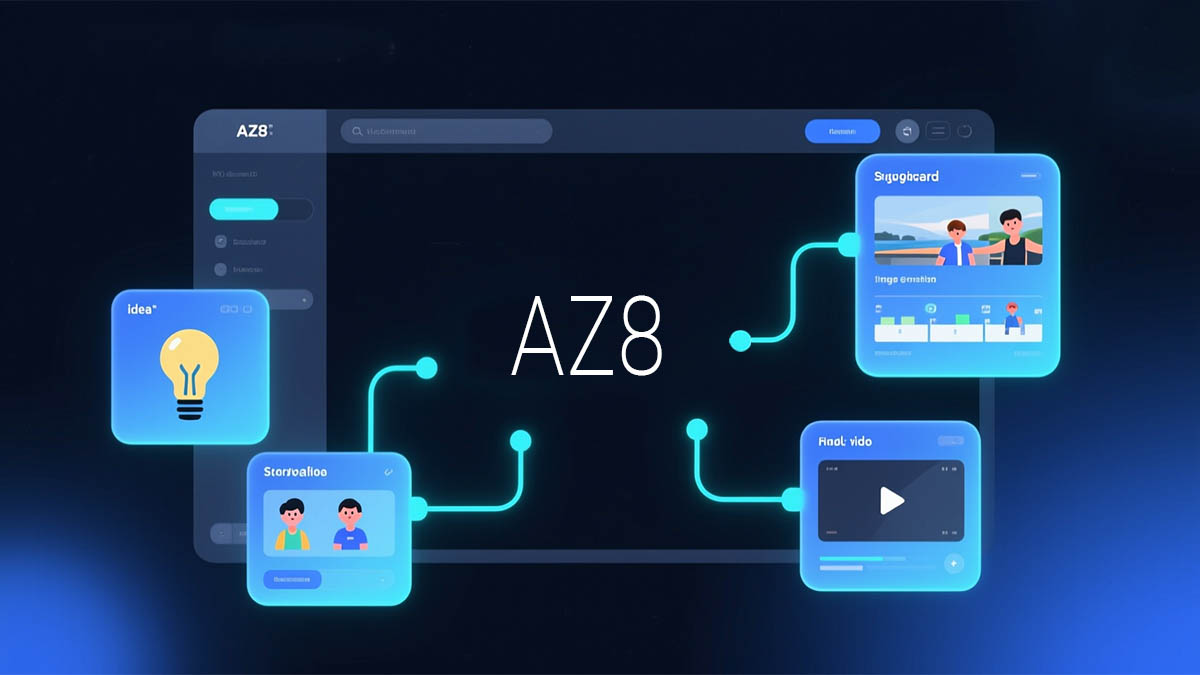
AZ8 is an AI video creation platform built around a canvas-based workflow. It gives creators a workspace where they can plan scenes, generate visual assets, manage references, and turn ideas into AI-generated videos with more control.
At its core, AZ8 is more than a basic text to video generator. It works more like an AI video workspace for creators who need structure. A user can start with a written idea, create key images, turn images into motion, organize character references, and build a video through connected steps.
This makes the AZ8 AI video generator useful for creators who want to do more than test random prompts. It is especially relevant for AI filmmakers, faceless video creators, visual storytellers, AI artists, social media creators, and small creative teams. These users often need a tool that can support story planning, visual continuity, and repeatable production workflows.
AZ8 also fits creators who are exploring AI-native storytelling. Instead of only making short clips, many creators now want to build visual worlds, recurring characters, cinematic scenes, and story-based videos. For that kind of work, a simple prompt-only tool can feel limited. AZ8 gives creators more room to organize and refine their ideas.
For creators looking for the best AI video generator for structured creative work, AZ8 is a strong option because it focuses on workflow, references, and scene control rather than only fast output.
Features of AZ8
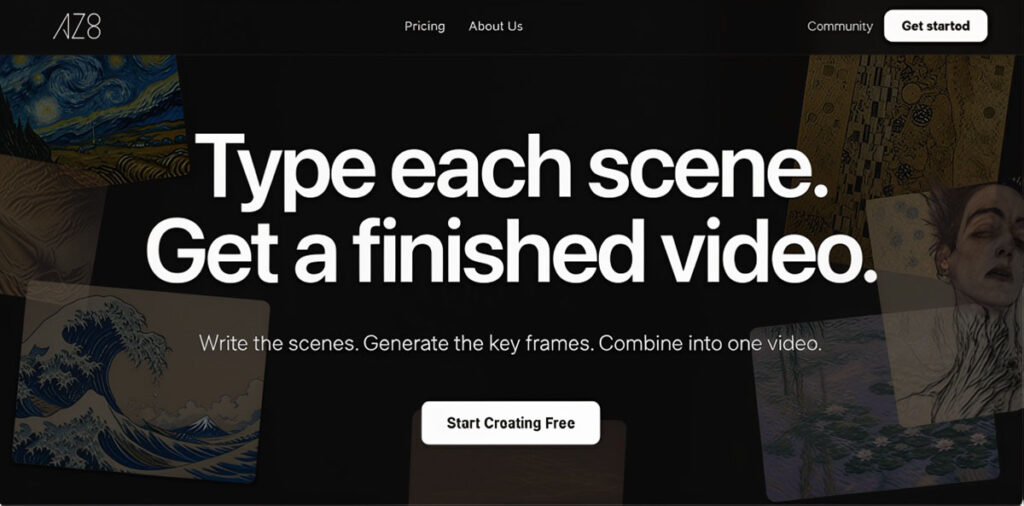
The main feature of AZ8 is its canvas-based workflow. Creators can keep prompts, images, videos, character references, audio ideas, and different versions in one place. This helps reduce the scattered process that often happens when using many separate AI tools.
AZ8 Text to Video is useful for creators who want to start from written ideas. A user can describe a scene, character, camera direction, action, or mood, then develop that prompt into a video project. This makes AZ8 a practical text to video tool for cinematic concepts, story videos, social media content, and visual testing.
For users who want to convert text to video, AZ8 offers more context than a simple prompt box. The written idea can stay connected with image references, key frames, and generated clips. This makes it easier to revise and improve the project over time.
AZ8 Image to Video is another important workflow. Many creators prefer to start with an image because it gives the AI a clearer visual target. A still image can show the character, lighting, style, composition, and mood more directly than text. This makes AZ8 image to video AI useful for creators who want stronger control over the final result.
The platform also supports video to video AI workflows. This can help users refine existing clips, test a new style, or continue developing a previous generation. For creators who work through several versions, this makes the video process more flexible.
You may also like: 9 Incredible Free Google AI Tools You Can Use and Stop Paying for Subscriptions
The AZ8 image generator can also help users create character frames, backgrounds, concept art, and mood references before moving into video. This makes AZ8 useful for AI image creators who want to expand from still visuals into motion-based content.
Character consistency is another practical strength. Many AI video tools struggle when the same character appears across multiple scenes. AZ8’s reference-based workflow helps creators manage visual identity more clearly, which is useful for story videos, cinematic scenes, and recurring character projects.
For faceless video creation, AZ8 can support creators who want to build content without appearing on camera. Users can create AI-generated scenes, characters, narration ideas, and visual sequences while keeping the project organized.
AZ8 also works well for AI story video generator workflows. A story video usually needs more than one good clip. It may need an opening scene, a main character, a conflict, a motion shot, and an ending. AZ8 helps creators build these parts in a more connected way.
Pros & Cons of AZ8
Pros
✅ AZ8 gives creators a more organized AI video workspace. Prompts, images, videos, references, and versions can stay connected in one creative flow.
✅ It supports several major creation paths, including text to video, image to video, video to video AI, AI image generation, and story-based video planning.
✅ AZ8 is useful for creators who want more control over visual continuity. Character references and key frames can help make AI video projects feel less random.
✅ The platform is a strong fit for AI-native storytelling. It can support cinematic shorts, faceless videos, creator-led projects, visual worlds, and story scenes.
✅ AZ8 gives creators more flexibility than a simple one-prompt tool. It is built for users who want to plan, test, revise, and organize their AI video production process.
✅ For creators searching for the best AI video platform for creators, AZ8 is one of the stronger choices because it combines video generation, image references, scene planning, and workflow control.
Cons
❌ AZ8 may take more time to learn than a simple prompt-only AI video generator because it offers a fuller creative workflow.
❌ Output quality still depends on prompt clarity, image references, model choice, and how many versions the creator tests.
❌ Users who only need one quick casual clip may not need the full value of the canvas-based workflow.
❌ Some final videos may still need outside editing for subtitles, pacing, transitions, sound design, or platform-specific formatting.
FAQs
Is AZ8 a text to video generator?
Yes. AZ8 supports text to video workflows. Users can start with a written prompt or scene description and develop it into a video project with supporting references and visual assets.
Can AZ8 turn images into videos?
Yes. AZ8 supports image to video creation. Users can start with a character image, product image, concept frame, or visual reference and use it as the base for video generation.
Is AZ8 good for faceless video creation?
Yes. AZ8 can be useful for faceless video creation because it helps creators build AI-generated scenes, characters, narration ideas, and visual sequences without appearing on camera.
Who should use AZ8?
AZ8 is best for creators who want more control over AI video production. It fits AI filmmakers, visual storytellers, faceless creators, AI artists, social media creators, and teams building repeatable AI video workflows.