

Stop Repeating Prompts — How Seedance 2.5’s Accuracy Saves Hours for Social Media Managers
The Hidden Time Drain That Every Social Media Manager Recognizes
There is a specific kind of frustration that social media managers who work with AI video tools know intimately. You write a detailed prompt. You generate the video. The output is close — but not quite right. So you adjust the prompt, regenerate, and get something slightly different but still not what you described. You adjust again. Regenerate again.
By the third or fourth cycle, you have spent more time iterating on a single video than you would have spent editing it manually. The tool that was supposed to save you time has consumed it instead, and the creative energy that should have gone into strategy and content planning has been spent on prompt debugging.
Why Prompt Iteration Loops Are Costing Social Media Teams Real Productivity
The prompt iteration problem stems from low model instruction fidelity rather than user skill gaps. When an AI video generator fails to execute prompts accurately, multiple regeneration cycles become mandatory to meet professional quality standards. For social media managers producing 5 to 10 videos weekly across brand accounts, this overhead accumulates into hours of lost productivity, plus downstream issues: creative fatigue from repeated refinements, shrinking publishing deadline buffers, and final outputs that subtly drift from the original creative vision.
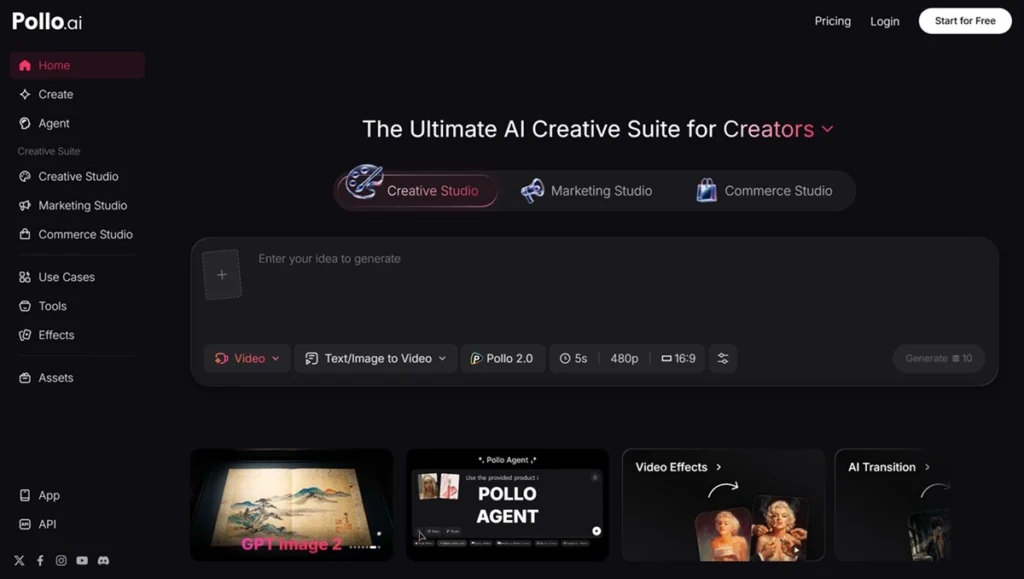
Seedance 2.5, available on the Pollo AI platform, solves this at the architectural level instead of adjusting surface workflows. Its 20% improvement in prompt instruction fidelity delivers far more accurate execution of scene composition, character actions, environmental details, camera movement and atmospheric settings, directly cutting regeneration cycles and reducing weekly time waste from constant prompt tweaking.
In practice, for a manager creating 6 weekly brand videos, a lower-fidelity model requires 3 generations per video (18 total weekly), while Seedance 2.5 reduces this to 1–2 cycles per video, saving 6–12 generation rounds along with creative energy. This shifts iteration from frustrating error correction to productive creative exploration. Combined with 50 multimodal reference support and native 4K 30-second continuous video, it enables consistent brand identity across content series without extra manual editing overhead.
Step-by-Step: Building a Low-Iteration Video Production Workflow
Step 1 — Develop a Prompt Template Library Specific to Your Brand Accounts
The most effective way to reduce prompt iteration is to stop writing prompts from scratch for every video. Build a structured prompt template library — organized by content type, scene category, and visual style — that encodes the prompt language you have already validated through previous successful generations.
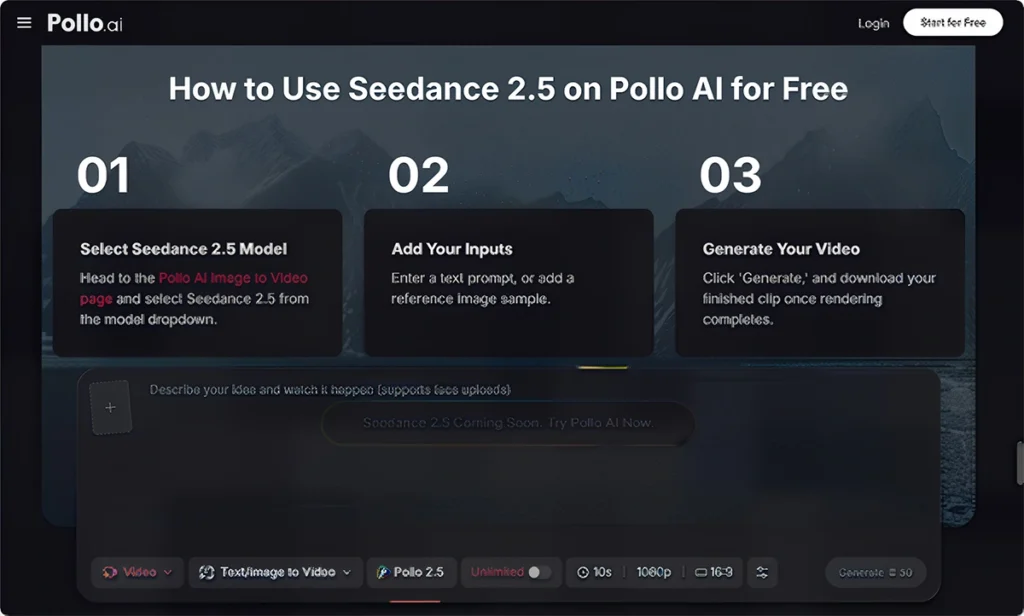
When a new video concept arises, start from the relevant template and adapt it for the specific content rather than reconstructing the prompt architecture from nothing. This approach leverages the accuracy advantage of Seedance 2.5 by ensuring that your prompts are consistently structured in the language the model interprets most accurately.
Step 2 — Configure Brand-Specific Reference Sets in Seedance 2.5
For each brand account you manage, build a dedicated reference set in Pollo AI that establishes the brand’s visual identity parameters for Seedance 2.5. This includes character references for any recurring brand personas, environmental references for the settings that appear in the brand’s content, and style references that define the camera movement vocabulary and visual aesthetic the brand uses.
Save these reference configurations so they can be loaded instantly at the start of each production session — eliminating the setup time that would otherwise be required and ensuring that every generation starts from a consistent brand specification.
Step 3 — Write Prompts With the Specificity That High-Fidelity Models Reward
Higher prompt fidelity in Seedance 2.5 means that specific, concrete prompt language produces proportionally better results than vague or general descriptions. Train yourself and your team to write prompts that describe scene composition in spatial terms, character action in physical terms, atmospheric qualities in sensory terms, and camera movement in directorial terms. “A woman in a bright kitchen picking up a coffee mug and smiling at the camera, slow push-in, warm morning light from the left” produces a more accurate output than “a woman in a kitchen with coffee.” The investment in prompt specificity pays dividends in reduced iteration cycles.
Step 4 — Use Localized Editing for Targeted Refinement
When a generated video is close but requires a specific adjustment — a background element, a lighting quality, a character expression — use Seedance 2.5’s localized lossless editing capability to target that element specifically rather than regenerating the entire clip.
This targeted refinement approach is what makes high-volume video production genuinely efficient: instead of discarding a largely successful generation because one element is off, you preserve the successful elements and address the specific issue. For social media managers producing multiple videos per day, this capability alone can eliminate hours of weekly regeneration overhead.
Step 5 — Integrate Text-to-Video for Editorial and Educational Content
Social media managers typically produce a mix of branded video content and informational or editorial posts. For the latter category, Lumen5 AI Video Generator provides a production workflow that complements the character-driven, reference-controlled approach of Seedance 2.5 on Pollo AI. Lumen5 converts text-based content — articles, scripts, reports, and web content — into professional video automatically, with AI narration available in over forty languages, automatic scene construction from a large media library, and brand-customized templates that maintain visual consistency across outputs.
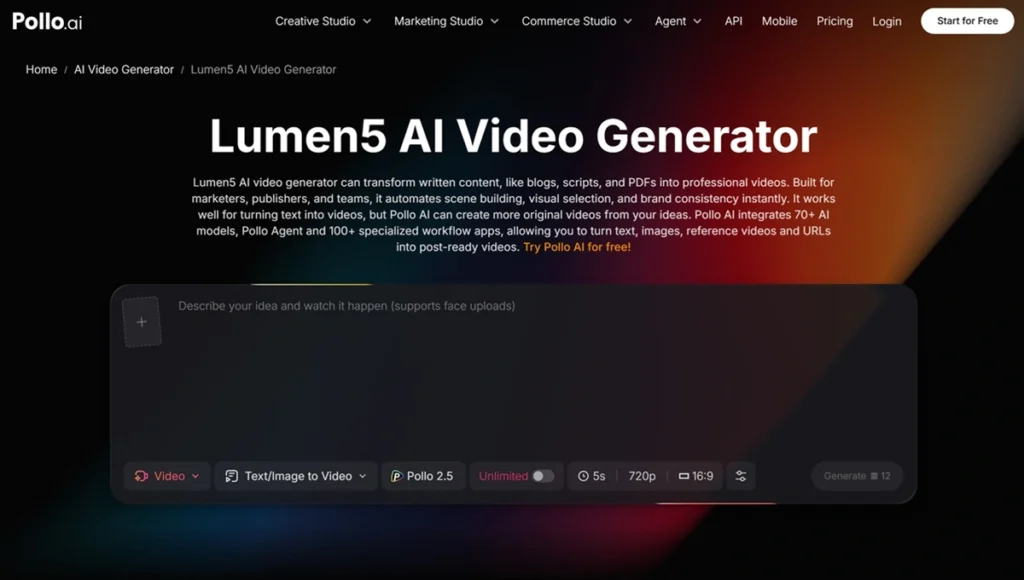
For social media managers who regularly repurpose written content into video for platforms like LinkedIn or YouTube, Lumen5 handles this conversion efficiently without requiring manual editing skills. The combination of Seedance 2.5 for original brand video creation and Lumen5 for content repurposing covers the full range of video production needs that most social media management roles involve.
You may also like The Rise of AI Presentation Video Tools Where Flexclip Fits In
Measuring the Impact of Reduced Iteration on Your Content Calendar
The productivity gains from reduced prompt iteration are measurable in concrete terms that matter to social media managers and the teams they report to. Track the average number of generation cycles per published video before and after implementing a structured prompt template library and reference architecture. Track the total time from initial concept to published video for a representative sample of content. Track the proportion of your weekly production time spent on iteration versus strategy, planning, and creative development.
These metrics make the efficiency gains visible and justify continued investment in building out the prompt library and reference architecture that make low-iteration production sustainable. They also identify the content types and video formats where iteration overhead remains highest, pointing toward the areas where additional prompt template development will deliver the greatest return.
Conclusion: Reclaim the Hours That Prompt Iteration Has Been Consuming
The time that social media managers spend in prompt iteration loops is not an inevitable cost of AI video production — it is a consequence of working with tools that have not been optimized for instruction fidelity. Seedance 2.5 on Pollo AI changes this dynamic by delivering meaningfully higher accuracy between prompt and output, supported by a reference architecture that anchors brand consistency and a localized editing capability that eliminates full regeneration for targeted refinements.
Build your prompt template library, configure your brand reference sets, and start measuring the difference in your weekly production time. The hours you reclaim belong back in strategy, creativity, and the work that actually moves your accounts forward.