
The Rise of AI Presentation Video Tools: Where FlexClip Fits In
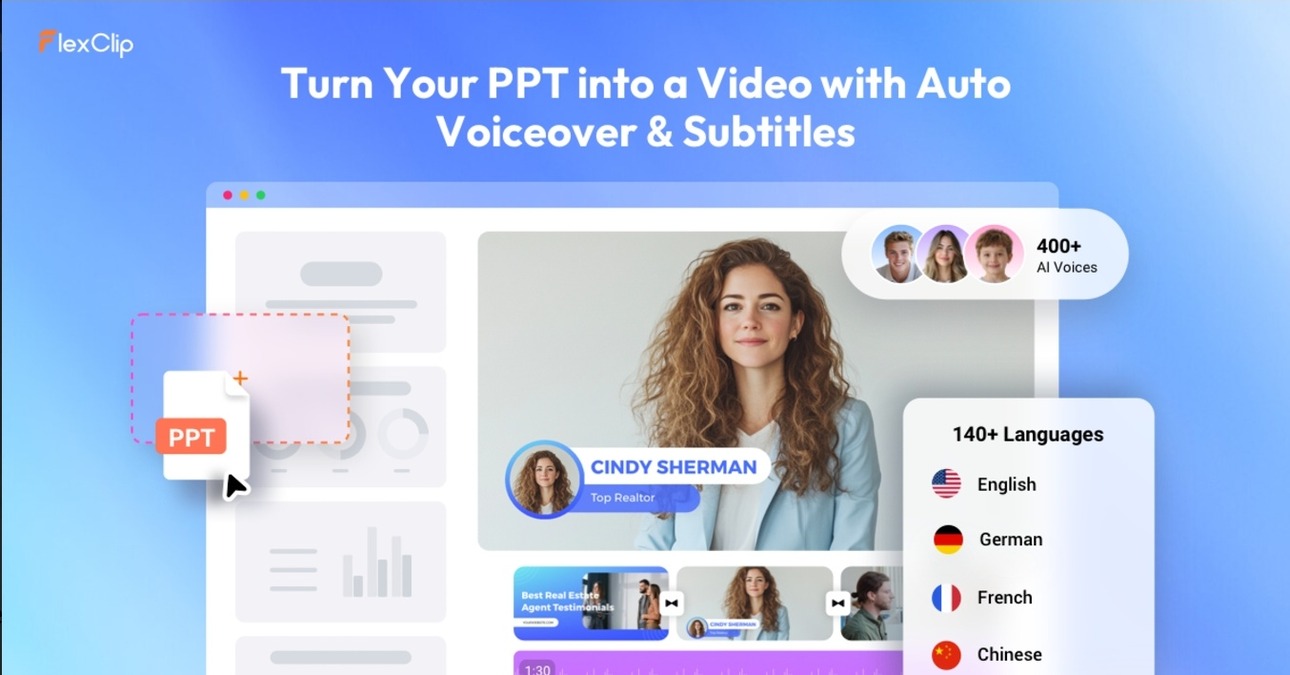
The way we communicate ideas is evolving. Traditional slide-based presentations are gradually being replaced—or at least supplemented—by video content. This shift is driven by changes in audience behavior, where visual storytelling and on-demand consumption are becoming the norm.In this context, AI-powered tools like FlexClip’s PPT to Video converter represent a broader trend: the automation of content transformation.
From Static Slides to Dynamic Content
PowerPoint presentations were originally designed for live delivery. They rely heavily on a speaker to provide context, explanation, and engagement.
When shared independently, however, slides often lose their effectiveness. Without narration or pacing, they become static and difficult to follow.
Video solves this problem by combining visuals, timing, and audio into a single, cohesive format. The challenge has always been the effort required to create such videos.
AI is now changing that equation.
Automation as a Creative Enabler
FlexClip’s AI PPT-to-Video tool exemplifies how automation can simplify content creation.
Instead of manually editing videos, users can upload a presentation and allow the system to generate a video automatically. The addition of AI voiceover further reduces the need for external resources.
This does not eliminate creativity—it shifts it. Users spend less time on technical execution and more time refining content and messaging.
Accessibility and Democratization
One of the most significant impacts of tools like FlexClip is increased accessibility.
Video production has traditionally required specialized skills and software. By contrast, AI-driven platforms lower the barrier to entry, enabling a wider range of users to create video content.
This democratization is particularly important in:
- Education, where teachers need scalable content solutions
- Small businesses, which may lack dedicated video teams
- Global communication, where multilingual content is essential
Efficiency in Content Repurposing
Another important aspect is content repurposing.
Organizations often invest significant time in creating presentations. With tools like FlexClip, these materials can be quickly transformed into videos, extending their value and reach.
This aligns with modern content strategies, where a single piece of content is adapted for multiple formats and platforms.
You may also like FlexClip Review 2024 Comprehensive Analysis of Advantages Disadvantages Hidden Features
Limitations of AI-Driven Tools
Despite their advantages, AI tools are not without limitations.
Automation can sometimes lead to generic outputs, especially when the input content lacks strong visual design. Additionally, AI-generated narration may not fully capture the nuance of human delivery.
Therefore, while tools like FlexClip can accelerate production, they still benefit from human oversight and refinement.
Where FlexClip Stands
FlexClip positions itself as a practical, user-friendly solution within this evolving landscape.
Its strengths lie in:
- Ease of use
- Fast processing
- Integrated AI features
Rather than competing with high-end video production software, it focuses on efficiency and accessibility.
This makes it particularly relevant for users who prioritize speed and simplicity over advanced customization.
Looking Ahead
The development of AI presentation tools reflects a broader shift toward automation in content creation. As these technologies continue to improve, we can expect:
- More natural AI voice generation
- Better visual enhancement of slides
- Greater customization options
FlexClip’s AI PPT to Video tool is part of this ongoing evolution, offering a glimpse into how presentations may be created and shared in the future.
Final Reflection
The transition from slides to video is not just a technical change—it represents a shift in how information is consumed and communicated.
By simplifying the conversion process, tools like FlexClip enable users to adapt to this new reality more easily. While not a replacement for all forms of video production, they serve as an efficient bridge between traditional and modern content formats.